Circular supply chains for local resourcesस्थानीय संसाधनों के लिए चक्रीय आपूर्ति श्रृंखलाएँ
Sahyog brings producers, aggregators, loop organisers and consumers into a shared supply network. Each member has a view of the work that matters to them, whether they offer a resource, arrange collection, organise a loop or need its output.सहयोग उत्पादकों, एकत्रकर्ताओं, लूप संयोजकों और उपभोक्ताओं को साझा आपूर्ति नेटवर्क में जोड़ता है। हर सदस्य अपने काम से जुड़ी जानकारी देख सकता है, चाहे वह संसाधन उपलब्ध कराता हो, संग्रह की व्यवस्था करता हो, लूप संभालता हो या उसका उत्पाद चाहता हो।
A coconut husk or a workshop offcut may be useful to another business. Sahyog helps members connect the available material to demand and coordinate the work between them.नारियल का छिलका या कार्यशाला में बचा टुकड़ा किसी दूसरे व्यवसाय के काम आ सकता है। सहयोग उपलब्ध सामग्री को माँग से जोड़ने और सदस्यों के बीच काम का समन्वय करने में मदद करता है।
Your resources and supply loopsआपके संसाधन और आपूर्ति लूप
See the networks you take part in and follow a loop’s work.अपने नेटवर्क देखें और लूप के काम की जानकारी पाएँ।
Producer · Your loops
What makes a supply chain circular?आपूर्ति श्रृंखला चक्रीय कैसे बनती है?
A circular supply chain keeps materials in use by finding a suitable next use for products, byproducts and recoverable resources. That use may involve repair, processing or recycling. It needs a buyer or user, material of the right quality, and a practical way to collect and deliver it.चक्रीय आपूर्ति श्रृंखला उत्पादों, उप-उत्पादों और वापस उपयोग में आने वाले संसाधनों के लिए अगला उचित उपयोग खोजती है। इसमें मरम्मत, प्रसंस्करण या पुनर्चक्रण हो सकता है। इसके लिए खरीदार या उपयोगकर्ता, सही गुणवत्ता की सामग्री और संग्रह तथा पहुँचाने की व्यावहारिक व्यवस्था चाहिए।
In Sahyog, a loop describes the members and the resource flows between them. Members agree what is available, what is needed and who will do the work. One person or business may take several roles. Processing facilities and workshops can also form part of the chain.सहयोग में लूप सदस्यों और उनके बीच संसाधनों का प्रवाह बताता है। सदस्य तय करते हैं कि क्या उपलब्ध है, क्या चाहिए और काम कौन करेगा। एक व्यक्ति या व्यवसाय कई भूमिकाएँ निभा सकता है। प्रसंस्करण इकाइयाँ और कार्यशालाएँ भी श्रृंखला का हिस्सा हो सकती हैं।
Coconut and scrap loopsनारियल और स्क्रैप के लूप
Different materials need different routes. These two examples show how collection and processing connect a resource to its next user.अलग सामग्री के लिए अलग व्यवस्था चाहिए। ये दो उदाहरण बताते हैं कि संग्रह और प्रसंस्करण किसी संसाधन को उसके अगले उपयोगकर्ता तक कैसे पहुँचाते हैं।
A coconut loopनारियल का लूप
A grower or collector supplies coconuts. An aggregator combines suitable quantities for a processor, and consumers buy the resulting products. Husks and shells can then be collected for another use where a suitable buyer and processing method exist.किसान या संग्रहकर्ता नारियल उपलब्ध कराता है। एकत्रकर्ता उचित मात्रा जोड़कर प्रसंस्करण इकाई तक पहुँचाता है और उपभोक्ता तैयार उत्पाद खरीदते हैं। उपयुक्त खरीदार और प्रक्रिया होने पर छिलके और खोल अगले उपयोग के लिए इकट्ठे किए जा सकते हैं।
The loop organiser connects these members and checks that supply and demand fit together. For husks, the receiving facility needs to know the quantity, moisture and condition before agreeing to collect them.लूप संयोजक इन सदस्यों को जोड़ता है और आपूर्ति तथा माँग का मेल जाँचता है। छिलकों का संग्रह तय करने से पहले प्राप्तकर्ता इकाई को उनकी मात्रा, नमी और स्थिति जाननी होगी।
A scrap metal loopधातु स्क्रैप का लूप
A workshop offers metal offcuts. A dealer or aggregator collects and grades compatible scrap. A processor prepares it for a foundry, and a manufacturer buys the resulting material.कार्यशाला धातु के बचे टुकड़े उपलब्ध कराती है। डीलर या एकत्रकर्ता उपयुक्त स्क्रैप जुटाता है और उसका वर्गीकरण करता है। प्रसंस्करण इकाई इसे ढलाईघर के लिए तैयार करती है और निर्माता तैयार सामग्री खरीदता है।
The grade, weight and condition of each load matter to the next member. Keeping these details with the collection and receipt records helps the group plan its work and resolve differences at handover.अगले सदस्य के लिए हर खेप की श्रेणी, वजन और स्थिति महत्त्वपूर्ण हैं। संग्रह और प्राप्ति के रिकॉर्ड के साथ ये विवरण रखने से समूह को काम की योजना बनाने और सुपुर्दगी के समय मतभेद सुलझाने में मदद मिलती है।
From a resource to a working loopसंसाधन से काम करने वाले लूप तक
The app brings networks, demand, member roles and activity records together. A loop organiser can see the overall chain while each member follows their own tasks.ऐप नेटवर्क, माँग, सदस्य भूमिकाएँ और गतिविधि रिकॉर्ड एक साथ रखता है। लूप संयोजक पूरी श्रृंखला देख सकता है और हर सदस्य अपने काम पर ध्यान दे सकता है।
Describe a resource or needसंसाधन या ज़रूरत बताएँ
Begin with the material, amount, location and availability. A useful description gives other members enough information to discuss a possible match.सामग्री, मात्रा, स्थान और उपलब्धता से शुरुआत करें। उपयोगी विवरण अन्य सदस्यों को सम्भव मिलान पर बात करने के लिए पर्याप्त जानकारी देता है।
Connect the membersसदस्यों को जोड़ें
Use a loop template to map the resource flow. Review the people, processing capacity and demand needed to make the loop work.लूप के नमूने से संसाधन प्रवाह तय करें। लूप चलाने के लिए ज़रूरी लोगों, प्रसंस्करण क्षमता और माँग की जाँच करें।
Arrange collectionसंग्रह की व्यवस्था करें
Agree which material to collect, who will collect it and where it will go. Aggregators coordinate compatible loads and the members on a route.तय करें कि कौन सी सामग्री एकत्र करनी है, कौन करेगा और वह कहाँ जाएगी। एकत्रकर्ता उपयुक्त खेपों और मार्ग के सदस्यों का समन्वय करते हैं।
Record the handoverसुपुर्दगी दर्ज करें
Confirm what was received and keep the activity record with the loop. Members can use it to follow unfinished work and prepare the next collection.प्राप्त सामग्री की पुष्टि करें और गतिविधि का रिकॉर्ड लूप के साथ रखें। सदस्य इससे अधूरे काम देख सकते हैं और अगले संग्रह की तैयारी कर सकते हैं।
Tools for running Sahyogसहयोग के संचालन के साधन
Sahyog Ops gives loop organisers and administrators a wider view of the network. They can inspect loops, review member requests and follow the work that needs attention.सहयोग ऑप्स लूप संयोजकों और प्रशासकों को नेटवर्क का व्यापक दृश्य देता है। वे लूप देख सकते हैं, सदस्यों के अनुरोधों की समीक्षा कर सकते हैं और ध्यान देने योग्य काम पर नज़र रख सकते हैं।
For loop organisersलूप संयोजकों के लिए
Find a loop and open its workspace to inspect its network, membership and ledger status.लूप खोजें और नेटवर्क, सदस्यता तथा लेजर की स्थिति देखने के लिए उसका कार्यक्षेत्र खोलें।
Sahyog Ops · Networks · Demonstration data
Operations tools are available to authorised teams. The screens shown here use demonstration data.संचालन के साधन अधिकृत टीमों के लिए हैं। यहाँ दिखाए गए स्क्रीन में प्रदर्शन के लिए डेटा है।
Describe your resource by voiceबोलकर अपना संसाधन बताएँ
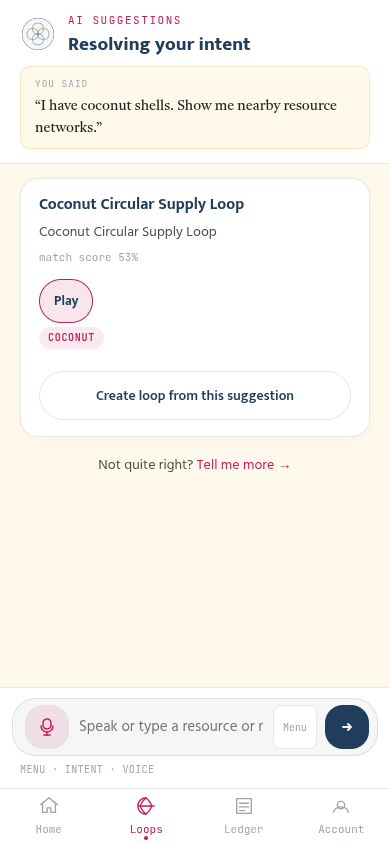
Members can speak or type a resource or a need. The app uses the request to suggest a relevant loop, then gives the member a place to review the suggestion and continue.सदस्य बोलकर या लिखकर अपना संसाधन या ज़रूरत बता सकते हैं। ऐप अनुरोध के आधार पर संबंधित लूप सुझाता है। सदस्य सुझाव की जाँच करके आगे बढ़ सकता है।
"I have coconut shells. Show me nearby resource networks.""मेरे पास नारियल के खोल हैं। मुझे आस-पास के संसाधन नेटवर्क दिखाएँ।"
This sample voice request produced the result shown here in the actual app. The app suggests a Coconut Circular Supply Loop, with an option to create a loop from the suggestion or explain the need further.इस नमूना अनुरोध पर वास्तविक ऐप में यहाँ दिखाया परिणाम मिला। ऐप नारियल का चक्रीय आपूर्ति लूप सुझाता है। सदस्य इस सुझाव से लूप बना सकता है या अपनी ज़रूरत और स्पष्ट कर सकता है।
Reviewing the result is part of the workflow. The member checks the material description and confirms the quantity, location and collection terms as the loop takes shape.परिणाम की जाँच कार्यप्रवाह का हिस्सा है। लूप बनाते समय सदस्य सामग्री का विवरण जाँचता है और मात्रा, स्थान तथा संग्रह की शर्तें तय करता है।
Sample voice request · Actual app resultनमूना आवाज़ अनुरोध · वास्तविक ऐप का परिणाम
In developmentविकास जारी है
Agents for a working supply networkआपूर्ति नेटवर्क के काम में सहायता करने वाले एजेंट
We are developing agents to help participants find resources and buyers, plan collections, track materials and keep local supply networks working. Organisers and participants would review commitments and paid work before they are confirmed.हम ऐसे एजेंट विकसित कर रहे हैं जो संसाधन और खरीदार खोजने, संग्रह की योजना बनाने, सामग्री का क्रम दर्ज करने और स्थानीय आपूर्ति नेटवर्क चलाने में मदद करेंगे। प्रतिबद्धताओं और भुगतान वाले काम की पुष्टि से पहले संयोजक और प्रतिभागी उनकी समीक्षा करेंगे।
A proposed collection, from the first request to the next plan.पहली ज़रूरत से अगली योजना तक प्रस्तावित संग्रह।
↶ Records from each collection inform the next plan↶ हर संग्रह का अभिलेख अगली योजना में काम आता है
Begin with a need or a resource
A participant describes what is available or needed. The proposed service would ask for missing details such as quantity, quality, location and timing.
An example: coconut husk collectionएक उदाहरण: नारियल के छिलकों का संग्रह
A processor needs a regular supply of coconut husks. Nearby sellers record how much they can provide and when it can be collected.
The next phaseअगला चरण
Digital public infrastructureडिजिटल सार्वजनिक ढाँचा
We plan to connect Sahyog to public digital services. These include UPI for payments, Beckn and ONDC for finding businesses and services, and Account Aggregator and OCEN for consent-based financial information and access to credit. This work needs operating partners and verified transaction flows.हम सहयोग को सार्वजनिक डिजिटल सेवाओं से जोड़ने की योजना बना रहे हैं। इनमें भुगतान के लिए UPI, व्यवसाय और सेवाएँ खोजने के लिए Beckn और ONDC, तथा सहमति पर आधारित वित्तीय जानकारी और ऋण तक पहुँच के लिए Account Aggregator और OCEN शामिल हैं। इस काम के लिए संचालन साझेदार और सत्यापित लेनदेन प्रक्रिया चाहिए।
Local work opportunitiesस्थानीय काम के अवसर
Collection, sorting, processing, repair and transport all require people. We want loops to make this work visible and help people find relevant opportunities. Further development will explore how to describe the tasks, responsibilities and payment terms clearly.संग्रह, छँटाई, प्रसंस्करण, मरम्मत और परिवहन के लिए लोगों की ज़रूरत होती है। हम चाहते हैं कि लूप इन कामों को स्पष्ट करें और लोगों को संबंधित अवसर खोजने में मदद दें। आगे के विकास में काम, ज़िम्मेदारियाँ और भुगतान की शर्तें स्पष्ट करने के तरीके जाँचे जाएँगे।
Discuss your supply chainअपनी आपूर्ति श्रृंखला पर बात करें
If you produce a resource, collect materials, organise a network or need a regular supply, we would like to understand your work. Tell us what moves through your chain and where coordination needs to improve.आप संसाधन उपलब्ध कराते हैं, सामग्री इकट्ठी करते हैं, नेटवर्क संभालते हैं या नियमित आपूर्ति चाहते हैं, तो हम आपका काम समझना चाहते हैं। बताएँ कि आपकी श्रृंखला में क्या पहुँचता है और समन्वय कहाँ बेहतर हो सकता है।